BPC157 Peptides for Injury Repair

BPC157 Peptides for Sports Injury Repair
BPC157 Peptide for Injury Repair also called Body Protection Compound or Bepecin. A pentadecapeptide made up of 15 amino acids discovered in human gastric juice. It has been seen to accelerate the healing of injuries- Including gastric ulcers, tendons, ligaments & bones in testing. BPC-157 activates the proteinic FAK-paxillin pathway. Induces F-actin formation in fibroblasts. Increases the probability of cell survival during oxidative stress. BPC-157 is currently in phase II clinical trials for the treatment of IBD.
Our Experience: (Sports Medicine & Tendon/Ligament Repair)
The safety profile seems good, we have not had any allergic reactions so far. The injections seem to be the most potent when including the absorption ratios into the equation. We inject 200-300mcg via subcutaneous injection as close to the site of injury as possible. Studies have found that the patients who address the injuries (ligament/tendon/muscle tears) as early as possible see the best recovery mitigation. MedClub recently treated an (IT) tear in Dr. Jenn’s left knee with Platelet Rich Plasma, allowed the inflammation response to occur over 10 days, then started BPC-157 twice daily. An injury that would have taken multiple months to heal, ended up healing in less than 1 month. Tendon ends start to die quickly in post tear situations so quick action is key. BPC-157 is not effective when healing fully torn ligaments/tendons, but aids the recovery time after surgical intervention. This also leads us to believe that this peptide could really benefit people undergoing physical therapy, or in the recovery phase of certain injuries. MedClub® is helping patients gain access for an affordable price. We highly recommend the use of PRP before starting the BPC, as this combination/timeline of care has yielded the most promising results.
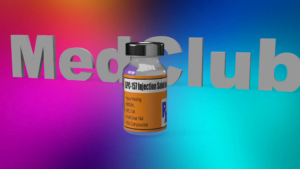
Benefits:
BPC-157 is commonly used to repair tendons, ligaments, muscles, ulcers, & organ damage. Commonly prescribed with anti-inflammatories. The current research suggests Bepecin influences multiple growth factors commonly involved in angiogenesis (production of blood vessels, platelets) as well as other factors involved in regeneration following damage. Our first hand experience with this peptide has been promising, showing 50-100% faster healing after injury. The current research has only been studied on rat populations, and much more is necessary to determine the exact methods of action pertaining to this peptide. BPC 157 may serve as a novel mediator of Robert’s cytoprotection, involved in maintaining of GI mucosa integrity, with no toxic effect. BPC 157 was successful in the therapy of GI tract, periodontitis, liver and pancreas lesions, and in the healing of various tissues and wounds. (Stimulated Egr-1 gene, NAB2, FAK-paxillin and JAK-2 pathways)
BPC-157 Uses
ORAL: 250-500 mcg by mouth daily in 1-2 divided doses
SUBQ: 250-500mcg subcutaneously once-twice daily
INTRAMUSCULAR: 250-500mcg as close to the site of injury as possible QD-BID
SUBLINGUAL: 200-500 mcg between cheek and gum daily in 1-2 divided doses
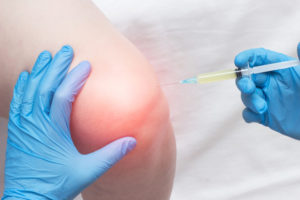
BPC-157 used to treat injuries
We will use the ACL tendon in the knee as an example for this article. This article is for educational purposes only, and this is not medical advice. We recommend patients come in person to receive proper diagnosis and training.
We have noticed that the subcutaneous injections of BPC-157 work best when injected as close to the site of injury as possible. For an IT tear, ACL/MCL the patient would draw up 200mcg into an insulin syringe and inject as close to the tendon as possible twice per day, usually in the morning and evening time. Physical therapy during this period is crucial, as well as light stretching after the initial inflammatory period has subsided. Most patients notice an aching sensation almost immediately, this is normal. Patients notice a difference in about 1-2 weeks, but 4 weeks is the recommended therapy duration. This is very injury specific, partial tears have higher success rates then complete tears. A full tear typically requires surgical intervention since the ends of the tendon start to die almost immediately. A surgeon would then snip off the ends to expose and connect the healthier tissue. For partial tears, or minor fractures BPC-157 has had very promising results & is getting athletes back to their sport in about half the time.

Combining BPC-157 with Thymosin based peptides to bolster effectiveness
Combining medical-grade BPC-157 with Thymosin Beta-4 (or its synthetic fragment, TB-500) creates a powerful synergistic effect often referred to as the “Wolverine Stack.” This duo accelerates injury and surgical recovery by targeting different but complementary biological pathways. While BPC-157 provides localized support by stimulating collagen synthesis and growth hormone receptors in tendons and ligaments, Thymosin-B4 operates systemically, regulating the protein actin to facilitate rapid cell migration to injury sites. Together, they promote angiogenesis (new blood vessel formation), which improves nutrient delivery and waste removal in damaged tissues, effectively shortening traditional healing timelines.
For post-surgical rehabilitation, this combination is particularly effective at reducing systemic inflammation and preventing the formation of excessive scar tissue or fibrosis. BPC-157 helps protect the site from oxidative stress while TB-500 enhances flexibility and mobility by supporting the structural integrity of connective tissues. Patients often report significant reductions in pain and swelling within the first one to two weeks, with measurable improvements in range of motion following shortly after. Using pharmaceutical-grade compounds from a certified compounding pharmacy ensures the purity and stability necessary for these peptides to remain biologically active and effective throughout the recovery process.
Key benefits of this recovery protocol include:
- Accelerated Soft Tissue Repair: Speeds up the healing of muscle tears, ligament sprains, and tendon injuries.
- Enhanced Mobility: Tb-4/Tb-5 specifically aids in restoring flexibility and reducing post-op stiffness.
- Potent Anti-Inflammatory Action: Both peptides work together to calm local and systemic inflammation.
- Structural Resilience: BPC-157 promotes collagen organization, resulting in stronger, more resilient healed tissue compared to natural recovery alone.
- Bone and Nerve Support: Research suggests these peptides also aid in bone healing and nervous system regeneration.
The body is an amazing organism, able to assess, process, and restore damaged cells all on its own. The goal is to optimize the body’s cellular repair process while decreasing duration.
How to start BPC157/Thymosin Peptides for Injury Repair Therapy With MedClub®
Purchase BPC-157/Pentadecapeptide – Telemedicine
BPC-157/Thymosin-b4/Tb-500 Telemedicine
Consult with us in person at our Palm Beach clinic or via TeleHealth Online
Call to schedule an appointment 561-214-3323