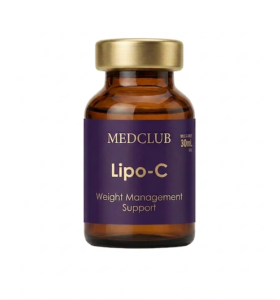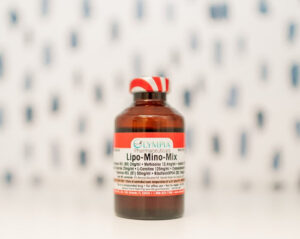
Losing weight is often harder than gaining it. Diet, activity level, metabolism, sleep, stress, and underlying health conditions can all play a role in weight gain — and addressing it usually starts with the fundamentals: eating a balanced diet, staying active, and reducing excess sugar and empty calories (like sugary sodas and juices) in favor of water and unsweetened beverages.
For many people, diet and exercise changes are enough. But for others — even after real, sustained effort — weight can be difficult to shift on its own. This is often where a conversation with a doctor becomes valuable. If you’re located in West Palm Beach, Palm Beach Island, Jupiter, or elsewhere in Palm Beach County, MedClub’s physicians offer in-person and telemedicine evaluations to help determine what’s actually driving the difficulty — thyroid function, insulin resistance, and other underlying factors can all play a role — and whether a prescription weight loss medication is appropriate as part of a broader treatment plan.
Body mass index (BMI) is one tool doctors use as part of that evaluation, alongside other health factors such as blood pressure, blood sugar, and existing health conditions — but it’s only one piece of the picture, not a standalone qualifying test. BMI alone doesn’t distinguish between muscle mass and body fat, which is why two people at the same BMI can have very different health profiles. Your provider will consider your full health picture, not BMI in isolation, when discussing whether medication is right for you. (You’re welcome to check your own BMI using the calculator below as a general reference point.)
Before prescribing any weight loss medication, your doctor will need a complete picture of your health — including any allergies, all current medications and supplements, and whether you are pregnant, breastfeeding, or planning to become pregnant, since certain medications are not appropriate in those circumstances.
There are several FDA-approved prescription options a doctor may consider, including Qsymia, phentermine, orlistat, Saxenda, semaglutide, liraglutide, tirzepatide, and Contrave — each with a different mechanism, side effect profile, and set of considerations, which we’ll walk through below. Our Palm Beach County-based clinical team can help you understand which options may be worth discussing at your consultation, whether you visit us in person or connect through our telemedicine platform.
Only thing I can say is I wish I would have found Dr Jenn years ago. I’d spent years bouncing between doctors, trying one thing after another, & never really feeling like anyone understood what was going on with me. Dr Jenn was different — she actually listened, & for the first time I felt like someone saw the full picture. She worked with me on a plan that was actually right for me, alongside real lifestyle changes, & it’s made a real difference. I’m back at the gym, I feel like myself again, & for the first time in a long time I feel like I have control of my life. Dr Jenn is an amazing woman, & I’m so grateful I found her.
R. Clark
MedClub Patient
Schedule your visit today!
Different Types of Weight Loss Medications
Semaglutide mimics human glucagon-like peptide-1 (GLP-1), a hormone that increases insulin secretion, slows gastric emptying, and helps regulate appetite. It’s available as a once-weekly subcutaneous injection or in oral form.
Semaglutide is FDA-approved under two brand names depending on the indication: as a treatment to improve blood sugar control in adults with type 2 diabetes, and separately, at a higher dose, as a treatment for chronic weight management in adults with obesity or who are overweight with a weight-related health condition, used alongside a reduced-calorie diet and increased physical activity.
Clinical trials have shown clinically meaningful weight loss in many patients using semaglutide for this indication, though individual results vary significantly based on dose, duration, and adherence to accompanying lifestyle changes — your provider can discuss what a realistic outcome may look like for your specific situation.
Boxed Warning: Semaglutide carries an FDA boxed warning for the risk of thyroid C-cell tumors, based on findings in rodent studies. It is contraindicated in patients with a personal or family history of medullary thyroid carcinoma or Multiple Endocrine Neoplasia syndrome type 2. Common side effects include nausea, vomiting, diarrhea, constipation, and abdominal pain.
Tirzepatide is a dual agonist, activating both GLP-1 (glucagon-like peptide-1) and GIP (glucose-dependent insulinotropic polypeptide) receptors, giving it a broader mechanism of action than single-hormone GLP-1 therapies alone. By activating both pathways, tirzepatide helps increase insulin secretion in response to meals, suppress glucagon, slow gastric emptying, and reduce appetite.
Like semaglutide, tirzepatide is FDA-approved under two brand names depending on indication: as a treatment to improve blood sugar control in adults with type 2 diabetes, and separately as a treatment for chronic weight management in adults with obesity or who are overweight with a weight-related health condition, alongside a reduced-calorie diet and increased physical activity.
Clinical trials have shown dose-dependent weight loss with tirzepatide, with outcomes varying based on dose, individual metabolic factors, and whether the patient also has type 2 diabetes. As with any GLP-1/GIP therapy, individual results vary, and your provider can help set realistic expectations based on your specific health profile.
Boxed Warning: Tirzepatide carries an FDA boxed warning for the risk of thyroid C-cell tumors, based on findings in rodent studies, and is contraindicated in patients with a personal or family history of medullary thyroid carcinoma or Multiple Endocrine Neoplasia syndrome type 2. Common side effects include nausea, diarrhea, decreased appetite, vomiting, and constipation.
5-Amino-1MQ is a small-molecule compound currently being studied for its effects on NNMT (nicotinamide N-methyltransferase), an enzyme involved in cellular energy and fat metabolism. In preclinical (animal and laboratory) research, inhibiting NNMT activity has been associated with changes in metabolic rate and fat cell behavior.
This compound has not been approved by the FDA for weight loss or any other use in humans. Unlike the medications discussed elsewhere on this page, 5-Amino-1MQ has not completed the clinical trial process required to establish human safety and efficacy data, and it is not currently recognized as an approved substance for compounding into a prescription product. Research in this area is ongoing, and what is known so far comes primarily from early-stage laboratory and animal studies, not large-scale human trials.
This information is provided for general educational awareness of compounds currently being researched in this space — it is not a recommendation, and it should not be understood as an available or provider-recommended treatment option at this time.
PHENTERMINE
Phentermine is a prescription appetite suppressant, also known by brand names such as Adipex-P and Suprenza. It works as a stimulant that helps reduce appetite, and it’s one of the most commonly prescribed weight loss medications in the United States.
Phentermine is FDA-approved only for short-term use, as part of a broader plan that includes diet, exercise, and behavioral changes. It is not intended for long-term or indefinite use.
Common side effects include dry mouth, constipation, diarrhea, an unpleasant taste in the mouth, and insomnia. Because it is a stimulant, phentermine is not appropriate for everyone — patients with a history of heart disease, uncontrolled high blood pressure, hyperthyroidism, or a history of drug abuse are generally not candidates for this medication, and it is not intended for use with other appetite-suppressant medications. Your provider will review your full health history to determine whether phentermine is an appropriate option for you.
SAXENDA
Saxenda is a brand-name prescription medication containing liraglutide, the same active ingredient found in Victoza, a type 2 diabetes medication — Saxenda is formulated at a higher dose specifically for chronic weight management. Liraglutide works by mimicking GLP-1, a hormone that signals the brain when the stomach is full, helping reduce appetite and food intake.
Saxenda is FDA-approved for long-term use in chronic weight management, used alongside a reduced-calorie diet and increased physical activity, in adults with obesity or who are overweight with a weight-related health condition.
Boxed Warning: Like other GLP-1 medications, Saxenda carries an FDA boxed warning for the risk of thyroid C-cell tumors, based on findings in rodent studies, and is contraindicated in patients with a personal or family history of medullary thyroid carcinoma or Multiple Endocrine Neoplasia syndrome type 2.
Common side effects include nausea, diarrhea, constipation, vomiting, and low blood sugar. More serious risks include gallbladder disease, kidney problems, increased heart rate, and pancreatitis. Saxenda also carries a warning regarding suicidal thoughts and behaviors — patients and caregivers should monitor for any new or worsening depression, unusual mood changes, or suicidal thoughts, and contact a provider immediately if these occur. Your provider will review your full health history before determining whether Saxenda is appropriate for you.
CONTRAVE
Contrave is a combination medication containing naltrexone and bupropion in an extended-release formulation. The two components are thought to work together on brain pathways involved in appetite and cravings, helping reduce food intake as part of a broader weight management plan.
Contrave is FDA-approved for long-term use in chronic weight management, alongside a reduced-calorie diet and increased physical activity, in adults with obesity or who are overweight with a weight-related health condition.
Boxed Warning: Because Contrave contains bupropion, it carries an FDA boxed warning for increased risk of suicidal thoughts and behaviors, particularly in children, adolescents, and young adults. Patients and caregivers should monitor for new or worsening depression, unusual changes in mood or behavior, or suicidal thoughts, and contact a provider immediately if these occur.
Contrave is contraindicated in patients with a seizure disorder, as it can lower the seizure threshold, and should not be used by patients with a current or prior diagnosis of an eating disorder (such as anorexia or bulimia), uncontrolled hypertension, or those undergoing abrupt discontinuation of alcohol, benzodiazepines, or certain other medications. Common side effects include nausea, constipation, headache, vomiting, dizziness, dry mouth, increased blood pressure, and increased heart rate. Your provider will review your full health history to determine whether Contrave is appropriate for you.
The medication overviews above are provided for general educational purposes and are not exhaustive — they do not include every possible side effect, warning, drug interaction, or contraindication for each medication. Boxed warnings represent the FDA's most serious safety communications, but a complete list of risks, precautions, and prescribing information is available in each medication's official FDA-approved labeling.
The health-related information provided on this site is for educational and informational purposes only and is not intended as a substitute for professional medical advice, diagnosis, or treatment. Always seek the guidance of a qualified healthcare provider with any questions you may have regarding a medical condition, treatment, or medication. Never disregard professional medical advice or delay in seeking it because of information found on this website.
This content is not medical advice and should not be used to self-diagnose, self-select, or self-qualify for any medication. Every prescription decision is made individually by a licensed provider based on a complete medical evaluation, including your full health history, current medications, and any relevant lab work — not on general information from this page alone.
The statements made on this page have not been evaluated or approved by the FDA.
-
Rated 0 out of 5$179.00 – $239.00Price range: $179.00 through $239.00Select options This product has multiple variants. The options may be chosen on the product page -
Rated 0 out of 5$189.00 – $249.00Price range: $189.00 through $249.00Select options This product has multiple variants. The options may be chosen on the product page
A quick way to check your Body Mass Index. This is an educational estimate only — not a diagnosis or a determination of treatment eligibility.
Your Result
BMI is a general screening tool and does not account for muscle mass, bone density, age, sex, or overall health. It is not used alone to diagnose a medical condition or to determine eligibility for any treatment. A licensed provider will evaluate your full health history during your consultation.