
Testosterone in MCT Oil: Pros vs Cons
Testosterone in MCT Oil: Pros and Cons
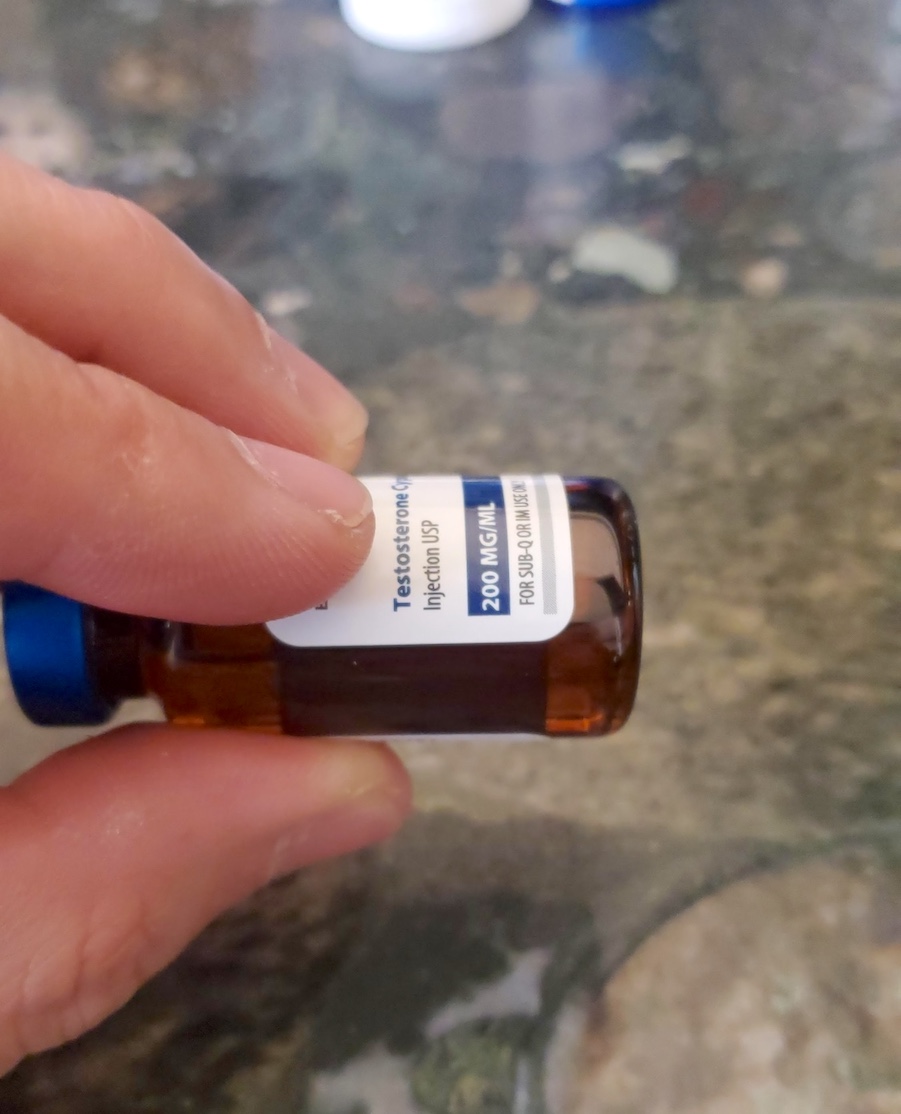
Product images are for illustration purposes only and may not depict the actual medication dispensed.
Testosterone replacement therapy (TRT) has become an increasingly common and effective treatment for men experiencing symptoms of low testosterone — fatigue, low libido, weight gain, and muscle loss. While several delivery methods exist (injections, gels, pellets, patches), many compounding pharmacies now offer testosterone suspended in MCT oil (medium-chain triglyceride oil) as a customizable injection option. Let’s explore the pros and cons.
Pros of Testosterone in MCT Oil
- Reduced Injection Pain: MCT oil is a thinner, smoother carrier compared to sesame or cottonseed oil. Many patients report less injection-site discomfort, making it a preferred option for long-term therapy.
- Better Absorption: MCTs are metabolized quickly and efficiently by the body, which can support more consistent absorption and stable hormone levels over time.
- Customizable Dosing: Compounded testosterone in MCT oil allows for custom strengths and concentrations, enabling precise titration based on your individual hormone levels, goals, and symptoms.
- Lower Allergenic Potential: Some patients react to traditional carriers like sesame or grapeseed oil. MCT oil is less likely to trigger allergic responses, especially in sensitive individuals.
- Improved Shelf Stability: MCT oil is less prone to oxidation than some other oils, which can extend shelf life and help maintain potency.
Cons of Testosterone in MCT Oil
- Not FDA-Approved: Compounded medications, including testosterone in MCT oil, are not FDA-approved and are not subject to the same manufacturing oversight as commercial products. Quality depends entirely on the compounding pharmacy — it’s important to choose a provider with longstanding relationships with trusted, accountable compounders.
- Injection Technique Matters: Because MCT oil is thinner, improper technique (injecting too fast, or into the wrong tissue) can cause irritation or oily leakage. A minimum depth of 1/2″ and a slow, controlled plunge speed help minimize this.
- Dosing Frequency Varies: Some patients achieve stable levels with once-weekly injections; others need 2–3 injections weekly to prevent fluctuations. Thinner oil flows more easily through a thinner-gauge needle, which can make more frequent injections more comfortable.
- Limited Availability: Not all pharmacies compound testosterone in MCT oil. Patients may need specialty or telemedicine-affiliated pharmacies, which can mean longer shipping times or limited access depending on location. At MedClub, we work with a network of compounding pharmacies and can source most types of testosterone and nandrolones in MCT oil on request.
- Cost May Vary: Compounded testosterone is usually priced close to brand-name or generic options, though specialty blends can run a bit higher. Most patients pay out of pocket or use an HSA/FSA rather than traditional insurance. Expect roughly $100 per 10mL vial, though pricing can vary.
Is Testosterone in MCT Oil Better for Subcutaneous Injections?
A subcutaneous (SubQ) injection delivers medication into the fatty tissue just beneath the skin, allowing for slower, more sustained absorption than deeper intramuscular injections. It’s commonly used for insulin, hormone therapies, peptides, and certain vaccines.
Important: SubQ administration of testosterone is not an FDA-approved route, and as providers we cannot recommend it as a delivery method. The information below reflects internal clinical testing we’ve conducted and share with our own patients as part of individualized, provider-guided care — it is not intended as self-administration instructions for anyone not already working directly with a prescribing clinician.
For some time, we’ve discouraged patients from administering testosterone via SubQ, for a few reasons. First, legally, providers cannot recommend a delivery method that isn’t officially approved. Second, more practically: grapeseed, cottonseed, and sesame oil are thick and difficult to draw into a thin, “insulin-style” needle — the draw is slow, bubbles form from the vacuum force required, and it’s time-consuming. Third, granuloma formation is a real risk: small, firm areas of inflammation can form under the skin in response to injected substances the body perceives as foreign or irritating.
There is one FDA-approved brand-name injection reconstituted into a bacteriostatic water solution — essentially a “water-based” testosterone shot delivered via auto-injector pen. Compounding pharmacies cannot produce a generic version of this specific product due to an active patent.
In our own clinical testing of the newer compounded MCT oil, we found that even though it’s noticeably thinner than traditional carrier oils, it still takes considerable time to draw and push through a 31-gauge needle. We tested four needle sizes — 31G 5/16″, 30G 1/2″, 30G 5/16″, and 29G 1/2″ — to determine which performed best for SubQ administration of this thinner oil. The 5/16″ lengths proved too short, causing leakage more often than not, even with a slower plunge. The 30G and 29G 1/2″ needles performed best for small “micro-dose” injections of 0.1–0.25mL, administered multiple times weekly under provider guidance. The 30G 1/2″ was slightly more comfortable, though supply chain issues can sometimes make it harder to source.
We found the abdomen to be the most effective injection site for patients with sufficient fat to tolerate a 1/2″ depth (roughly 15%+ body fat); for leaner patients, the upper arm, gluteus medius, or quadricep areas worked well. Site selection often comes down to a patient’s ability to reach the area comfortably and perform sterile technique correctly. Most patients who explore SubQ do so to spread one large weekly dose into several smaller micro-doses — for side-effect management, therapeutic balance, or needle sensitivity. If you’re considering SubQ purely because you assume it’s less painful: that’s relative. Icing the injection site before cleaning with alcohol numbs the top layer of skin effectively, which is often what resolves needle anxiety after a few comfortable experiences.
MedClub’s Approach
At MedClub, we partner with PCAB-accredited U.S. compounding pharmacies that test for purity, potency, and sterility. Our clinicians provide injection training, regular hormone monitoring, and dosage adjustments based on your goals and response. We’re a small, family-run private clinic with a limited client list and no rotating providers — we get to know our patients well. We’re strong believers in patient education, and in keeping up with our own continuing education to stay current in hormone replacement therapy. We’ve been treating patients in South Florida for ten years.
Want to join the club?
Call our clinic to schedule your consultation and lab analysis.
Frequently Asked Questions
Important Disclosures
These statements have not been evaluated by the FDA. This article is provided for general educational purposes only and is not medical advice or a substitute for individualized evaluation. Compounded testosterone in MCT oil is not FDA-approved and has not been evaluated by the FDA for safety, efficacy, or quality.
Subcutaneous administration of testosterone is not an FDA-approved delivery route. MedClub does not recommend this route as a general practice; any discussion of technique here reflects internal clinical findings shared with patients already under direct provider care, not instructions for unsupervised self-administration.
TRT is a prescription treatment requiring an in-person medical evaluation and ongoing physician oversight. MedClub’s telehealth model applies to vitamins and peptide therapies, not to testosterone or other controlled substances. Individual results and appropriate treatment vary by patient. Pricing is approximate and subject to change.